

Plaza Royal casino Plinko game
Introduction
Plinko has become one of the most discussed instant-win formats on modern gambling platforms, and I can understand why. On the surface, it looks almost too simple to hold attention for long: you set a stake, choose a risk level, drop a ball, and watch it bounce through a field of pins until it lands in a payout slot. But that first impression is misleading. In practice, Plaza royal casino Plinko is built around a very specific kind of tension: short rounds, visible randomness, and a constant contrast between frequent low returns and the occasional high multiplier.
What makes this format worth analysing is not just its recognisable design. It is the way the game turns probability into something visual. In a slot, the maths is hidden behind reels, symbols, and bonus rounds. In Plinko, the uncertainty is right in front of the player. Every bounce feels meaningful, even though the result is still governed by a random number generator. That combination of transparency and suspense is a big part of the appeal.
For UK players looking at Plaza royal casino, the key question is not whether Plinko is trendy or streamer-friendly. The real question is much more practical: what does this game actually offer during a real session, how risky can it become, and who is likely to enjoy it beyond the first few minutes? That is what I want to break down here in concrete terms.
What Plaza royal casino Plinko is and why players notice it so quickly
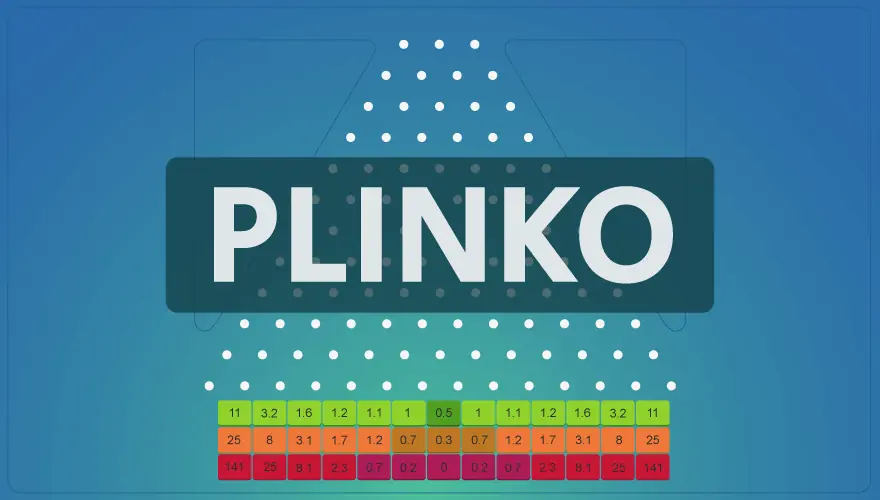
Plinko is a casino game based on a descending board filled with pegs. A ball is released from the top and deflects left or right as it collides with each pin. At the bottom of the board there are payout zones, each linked to a multiplier. The centre usually contains lower values, while the outer edges tend to hold the largest multipliers and the least likely outcomes.
That structure is easy to understand within seconds, which is one reason Plinko attracts so much attention. There is no paytable to memorise, no symbol hierarchy to decode, and no bonus feature sequence to wait for. A new player can open the interface and immediately grasp the basic objective. The accessibility is real, and it matters.
But the stronger reason for its visibility is psychological. Plinko creates suspense without asking for much patience. A slot may require dozens of spins before its rhythm becomes clear. Here, each drop is a complete event. You see the route, the near-misses, the drift toward the centre, and the occasional run toward a high-multiplier edge pocket. It gives the brain a clean, fast loop of anticipation and resolution.
I would highlight one important observation here: Plinko often feels more “honest” to players than many other casino products, not because it is more beatable, but because the path to the outcome is visible. That visual journey can create a stronger sense of involvement than the actual level of control justifies. This is exactly why the game deserves a closer look before serious play.
How the Plinko mechanic actually works in practice
At Plaza royal casino, as on similar platforms, Plinko usually revolves around a few adjustable settings. The core variables are the stake size, the number of rows on the board, and the selected risk level. These settings do not change the fact that outcomes are random, but they do shape how the session feels and how results are distributed.
The basic flow is straightforward:
The player sets a bet amount.
A risk mode is selected, commonly low, medium, or high.
In some versions, the number of rows can also be changed.
The ball is released from the top of the board.
It bounces through the pins and lands in a multiplier slot.
The stake is multiplied by the value of the final slot.
What matters is how those settings affect the payout map. Low-risk mode usually compresses outcomes toward modest returns. You are more likely to see smaller multipliers and less dramatic swings. High-risk mode stretches the distribution. The top-end rewards become much larger, but they are paired with a far greater chance of landing on low-value results. In other words, the interface may look almost identical, but the underlying session profile changes sharply.
The row count, where available, also matters more than many new players expect. More rows generally mean more deflections and a wider range of final landing positions. This can increase the sense of suspense because the route is longer, but it also changes the shape of the probability curve. The centre remains statistically favoured, while extreme edge outcomes become rarer and more visually dramatic.
One of the most useful ways to understand Plinko is to stop thinking of each bounce as a decision point and start thinking of the board as a probability funnel. The ball appears to carve its own path, yet the broad logic remains stable: central outcomes occur more often, edge outcomes less often, and the risk setting determines how sharply that difference is felt in the bankroll.
Why the game feels fast and where the engagement really comes from
The tempo of Plinko is one of its defining traits. A single round is brief, often just a few seconds, which creates a rapid cycle of stake, outcome, and reset. This speed can make the game feel light and casual, especially compared with blackjack for UK players that require more attention or slots with layered bonus structures. But that same speed can also make spending accelerate quietly if the player does not set boundaries in advance.
What keeps people engaged is not complexity. It is contrast. Most sessions are built on a stream of ordinary results interrupted by occasional standout moments. A ball drifting toward a high multiplier creates a very specific kind of tension because the player can see the possibility developing in real time. That visual suspense is different from waiting for reels to stop. It is more immediate and, for some players, more emotionally charged.
I have noticed that Plinko often creates a stronger reaction to near-misses than many slots do. When the ball clips away from an outer multiplier at the last moment, the player tends to remember it. This is one of the game’s most effective design traits. It can make short sessions feel eventful even when the actual return profile remains modest.
There is another detail worth mentioning. Because the rounds are so short and the rules are so clear, players often underestimate how repetitive the format can become. If you enjoy visible motion, quick outcomes, and probability-driven suspense, that repetition may feel satisfying. If you need evolving features, changing visuals, or narrative progression, Plinko can start to feel one-dimensional surprisingly fast.
Risk levels, probability patterns and what they mean for a real bankroll
Before launching Plaza royal casino Plinko, a player should understand one essential point: simple presentation does not mean gentle variance. Depending on the chosen mode, Plinko can be relatively stable or highly aggressive. The game’s risk setting is not a cosmetic option. It is the main factor shaping the distribution of outcomes.
Here is a practical breakdown: The full picture of payment methods lives in best Plaza Royal Casino Aviator crash game, including the less common ones.
| Setting | Typical session feel | What it usually means in practice |
|---|---|---|
| Low risk | Smoother, more repetitive | More frequent modest returns, fewer dramatic swings, lower chance of very large multipliers |
| Medium risk | Balanced but still variable | Mix of small returns and occasional stronger hits, suitable for players testing the format |
| High risk | Sharp swings, more tension | Longer stretches of weak outcomes are possible, but the top-end multipliers become the main attraction |
The key misunderstanding I see most often is this: players assume that because they are watching the ball bounce, they can intuit when a better result is “due”. That is not how the game works. Each drop is independent. There is no balancing memory in the board, and there is no strategic timing that improves the chance of hitting a premium multiplier.
That does not make the experience meaningless. It simply means the value lies in choosing the right session style. If your budget is limited and you want longer playtime, lower risk and smaller stakes make more sense. If you are chasing rare high multipliers, you need to accept that the route to those outcomes may involve many disappointing drops in between. Before you make a deposit, it is worth reading best Plaza Royal Casino bonus deals for real money players for the fee and speed details.
A memorable truth about Plinko is that it can look calm while behaving brutally. The board is neat, the animation is clean, and the rules are easy to follow. Yet in high-risk mode, the bankroll can erode quickly because the session pace is fast and the premium outcomes are genuinely difficult to reach. Table game fans will get more out of this review after reading Plaza Royal Casino withdrawal times.
Who Plinko suits and who may find it frustrating
Plinko tends to suit players who enjoy short-form gambling with very clear rules. If you prefer instant resolution over long feature cycles, the format makes sense. It also appeals to those who like seeing probability play out visually rather than through abstract reel outcomes.
In my view, the game is a good fit for:
Players who want a simple interface without a learning curve.
Users who enjoy quick rounds and visible suspense.
Those comfortable with variance and able to manage session limits.
People testing different risk profiles in short controlled sessions.
It may be a poor fit for players who expect depth in the traditional slot sense. If you enjoy scatter symbols, free spins, expanding wilds, progressive layers, or tactical choices found in some table formats, Plinko can feel too stripped back. The same applies to anyone who dislikes repeated low-value outcomes while waiting for a larger hit that may never arrive during that session.
This is an important practical distinction. Plinko is not shallow because it lacks symbols or bonus rounds. Its depth comes from probability distribution and pace, not from content variety. That difference matters because many players discover too late that they were looking for entertainment structure, while Plinko mainly offers mathematical tension.
What to understand about session rhythm, expected outcomes and streaks
One of the reasons Plinko creates debate is that players often describe the same product in completely different ways. One person calls it steady and relaxing. Another says it is brutal and swing-heavy. Both can be correct, because the chosen settings radically alter the feel of the session.
In low-risk play, the rhythm can be almost hypnotic. Many drops return small multipliers, and the bankroll tends to move in smaller steps. In high-risk play, the rhythm changes. The player may go through a sequence of weak landings, followed by one result that changes the short-term picture. This creates a very different emotional profile.
It is also worth keeping expectations realistic. Plinko is not a skill game, even though the moving ball can make it feel interactive. The outcome is random, and the visible route is part of the presentation of that randomness. Watching the path can be exciting, but it should not be confused with an edge.
Another useful point: streaks in Plinko can feel more convincing than they really are. A run of central landings may look like a pattern, and a few edge-near misses may tempt the player to increase stake size. In reality, this is where discipline matters most. The game’s visual nature encourages emotional interpretation, but the maths does not reward chasing impressions.
How Plinko differs from slots and other common casino formats
To understand Plaza royal casino Plinko properly, it helps to compare it with more familiar categories. The biggest difference from classic slots is that Plinko removes most of the decorative layers. There are no reels, paylines, symbol combinations, or bonus narratives. The action is reduced to one random event with a visible path and a multiplier outcome.
That creates a different relationship with time. In slots, players often stay engaged because they are waiting for a feature round or building toward a larger event. In Plinko, every drop is self-contained. There is no accumulation mechanic in the usual sense. The excitement is concentrated into a few seconds rather than stretched across a sequence of spins.
Compared with roulette, Plinko shares the idea of independent rounds and fixed probability structure, but the presentation is more kinetic. Compared with real money crash games, it offers less decision pressure because the player is not required to cash out at the right moment. Compared with blackjack or baccarat, it removes any illusion of tactical influence and leans entirely into chance.
| Format | Main source of tension | Player experience |
|---|---|---|
| Plinko | Visible ball path and multiplier landing | Fast, clean, probability-focused, highly visual |
| Classic slots | Reel outcomes, features, bonus anticipation | Layered, content-driven, often more varied over time |
| Roulette | Single-number or sector result | Direct and familiar, but less visually progressive during each round |
| Crash games | Timing the cash-out | More decision-led, often more stressful moment to moment |
This comparison reveals the real identity of Plinko. It is not trying to replace slots by offering richer features. It is offering a more distilled form of chance-based entertainment.
Practical strengths and limitations of the format
Plinko has clear strengths, but they need to be framed properly. Its best quality is clarity. A player can understand the round structure almost instantly. That lowers the barrier to entry and makes the game suitable for short sessions. The second strength is pacing. Because rounds resolve quickly, the format works well for players who do not want to sit through long animations or complex bonus sequences.
There is also genuine appeal in the way the game visualises uncertainty. The bouncing ball creates suspense in a more tangible way than many static instant-win products. When done well, that visual logic gives the game a cleaner identity than many overloaded casino releases.
Still, the limitations are just as real. The first is repetition. Once the novelty of the board wears off, the experience depends almost entirely on whether you enjoy repeated probability events. The second is the danger of underestimating session cost. Quick rounds and simple controls can lead to more drops in less time than the player initially intends.
A third limitation is that Plinko can create misleading emotional feedback. Near-misses are memorable, but they do not indicate improved chances. This matters because the game’s visual design can encourage players to read meaning into random movement.
If I had to summarise the trade-off in one line, it would be this: Plinko offers clean, concentrated suspense, but not much variety beyond that.
What to check before starting a session at Plaza royal casino
Before playing Plinko at Plaza royal casino, I would suggest focusing on a few practical details rather than rushing into repeated drops. These checks help align the format with your budget and expectations.
Risk settings affect far more than the frequency of wins; they shape how the session's variance unfolds, which in turn determines how quickly your bankroll moves. Checking the paytable before you spin gives you a realistic sense of the volatility you are about to face, so you can match your stake to the swings rather than reacting to them mid-session.
Second, pay attention to the available multiplier range. The top figure often attracts attention, but it is only meaningful when viewed alongside how rarely it is likely to appear. A board advertising a large maximum multiplier can still produce long stretches of low-end outcomes.
Third, if a demo version is available, use it to understand rhythm rather than to hunt a pattern. Demo play is useful because it shows how the board behaves over a sequence of rounds and how different settings alter the feel of the session. What it cannot do is reveal a hidden timing trick, because there is none.
Fourth, decide in advance what kind of session you want. Are you looking for a slower, more controlled run with frequent modest results, or are you deliberately choosing a swing-heavy session in search of a rare spike? Plazaroyal casino users who answer that question before they start usually make better decisions during play.
Finally, treat the game’s simplicity with respect. This is another of those formats where the interface looks harmless, but the pace can turn a casual test into a longer session very quickly.
Final verdict on Plaza royal casino Plinko
Plaza royal casino Plinko offers a very specific gambling experience: fast rounds, visible randomness, adjustable risk, and a clean multiplier-based structure. Its strongest quality is that it makes chance easy to follow. You do not need to decode symbols or wait for a feature cycle to understand what is happening. The suspense is immediate, and for the right player that directness is the whole point.
The game works best for those who enjoy short, self-contained rounds and are comfortable with probability-driven swings. It is especially effective when approached with clear expectations: low-risk settings for smoother sessions, higher-risk settings for sharper variance and rarer top-end results. What matters most is understanding that the pleasant visual simplicity does not reduce the underlying randomness.
Its strengths are clear: accessibility, speed, and a strong sense of visual tension. Its weaker points are just as clear: repetition, the temptation to overplay because of the pace, and the tendency of near-misses to feel more meaningful than they are. For some players, that combination makes Plinko one of the most engaging modern casino formats. For others, especially those who want layered features or more strategic input, it may feel too narrow after the initial curiosity fades.
My overall view is straightforward. Plinko is worth trying if you want a stripped-back, high-clarity casino game where the drama comes from probability rather than presentation overload. But it only works well when the player understands what is really on offer: not control, not hidden depth, and not guaranteed excitement on every drop, but a fast and visually convincing form of pure chance.
FAQ
How does Plinko ball dropping work in real-money play?
A ball is released from the top and bounces down through the grid before landing in a multiplier slot. The multiplier shown by the landing position determines the result for that round. Each drop is resolved instantly after the ball settles.
What does “multiplier” mean in the Plinko section?
The multiplier is the payout coefficient tied to the slot where the ball lands. Different landing zones correspond to different multiplier levels. The chart for each round is shown in the game interface.
Is this Plinko game high risk or low risk compared with other casino games?
Plinko is often described as mid to high volatility depending on the current multiplier distribution displayed. Outcomes are still random for every ball drop, so sessions can swing quickly. For steadier control, many players prefer shorter round runs rather than extended streaks.
Can Plinko be played in demo mode, and what changes when switching to real money?
Demo mode lets players practice the mechanics with virtual funds. Real-money play uses the deposit balance linked to the account and applies the actual wager logic per drop. The multiplier results follow the same game rules, but the stakes and feedback to the balance differ.
What happens if the Plinko round does not start or the ball release button is unresponsive?
Refresh the game lobby view and confirm the connection is stable. Try exiting the Plinko interface and launching again from the game lobby to reload the session. If the issue persists, check whether real-money play is selected instead of demo mode, and contact support for account-related access.